
You search "tirzepatide Ireland" and find pharmacies, clinics and forum threads that treat tirzepatide and Mounjaro as if they were two different things — or as if they were the same, with no explanation of why. The short version is simple, and the licence text spells it out. This guide walks through what tirzepatide is, what Mounjaro is, and what the European licence actually says.
Quick answer (checked 3 October 2026 against the EMA product information): tirzepatide is the active substance. Mounjaro is the brand name under which it is authorised in the EU, including Ireland. One Mounjaro licence covers two uses — type 2 diabetes and weight management — and it is a prescription-only medicine. Tirzepatide sold as a "research" product online is not that licensed medicine.
Try the Slimbr weight loss plan
First month service fee just €49. If the doctor decides it's not suitable for you, your doctor consultation is free.
Tirzepatide vs Mounjaro: active substance vs brand
Every medicine has an active substance (the ingredient that does the work) and, usually, a brand name chosen by the company that markets it. Paracetamol is the substance; Panadol is a brand. In the same way, tirzepatide is the substance and Mounjaro is the brand.
- Ireland and the EU: Mounjaro, made by Eli Lilly, was first authorised by the European Commission on 15 September 2022. A single Mounjaro authorisation covers both type 2 diabetes and weight management.
- United States: the same substance is split across two brand names. The FDA approved Zepbound (tirzepatide) for chronic weight management in November 2023; Mounjaro is the US brand for type 2 diabetes.
So if you see "Zepbound" in American articles, it is tirzepatide too — but it is not a brand you will find on an Irish prescription. Here, the licensed product is Mounjaro. Our complete Mounjaro Ireland guide covers the treatment itself; this article is about the licence.
What the EU licence covers
The licence is set out in section 4.1 of the Summary of Product Characteristics (SmPC) published by the European Medicines Agency. It names two separate uses.
- Type 2 diabetes: for adults, adolescents and children aged 10 and over whose type 2 diabetes is insufficiently controlled, alongside diet and exercise — on its own where metformin is unsuitable, or added to other diabetes medicines.
- Weight management: for adults, as an adjunct to a reduced-calorie diet and increased physical activity, with a BMI of 30 or above, or 27 to under 30 together with at least one weight-related condition (for example high blood pressure, high cholesterol, sleep apnoea, cardiovascular disease, prediabetes or type 2 diabetes).
The weight-management wording is the same set of criteria we unpack in who qualifies for weight-loss injections in Ireland. The licence also notes that safety and efficacy for weight management have not been established in under-18s.
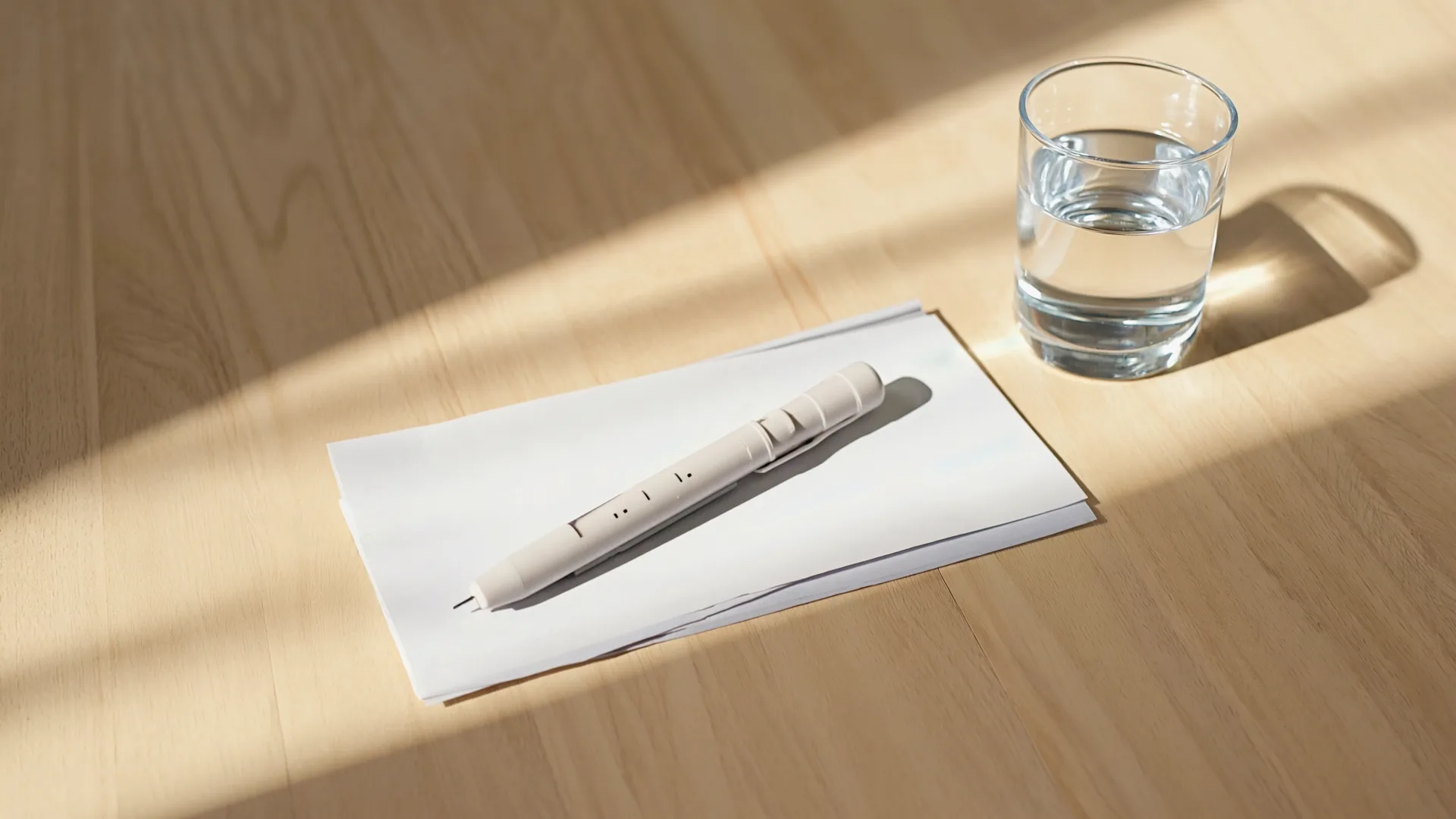
How the labelled dose steps work
This section describes what the SmPC says, not what any individual should do — a prescriber sets the actual plan. The labelled schedule is a stepped ladder, injected once a week under the skin of the abdomen or thigh (the upper arm if someone else gives the injection), at any time of day, with or without food.
- The starting dose is 2.5 mg once weekly.
- After 4 weeks, the labelled step is up to 5 mg once weekly.
- If needed, further increases are made in 2.5 mg increments, no sooner than every 4 weeks.
- For adults the recommended maintenance doses are 5 mg, 10 mg and 15 mg; 15 mg weekly is the maximum.
The SmPC also says that a missed dose can be taken as soon as possible within 4 days; beyond that, it is skipped and the next dose is taken on the usual day. The weekly day can be changed as long as two doses are at least 3 days apart. Your prescriber and the package leaflet are the reference for your own situation.
The dual GIP/GLP-1 mechanism in plain English
Your gut releases hormones after you eat that tell your pancreas and brain how the meal went. Two of them are called GLP-1 and GIP. According to the SmPC, tirzepatide is a long-acting medicine that activates the receptors for both hormones — which is why it is called a "dual agonist".
The licence describes the effect on weight as working mainly through appetite: clinical studies show it increases feelings of fullness and reduces hunger and food cravings, so people tend to eat less. Semaglutide (Wegovy), by contrast, targets only the GLP-1 receptor. How that difference plays out varies from person to person, which is one reason the choice of medicine is made by a prescriber.

Side effects at the frequencies the SmPC lists
The SmPC says the most frequently reported side effects are gastrointestinal, mostly mild to moderate, and that nausea, diarrhoea and vomiting were more frequent during dose escalation and eased over time. These are the categories it uses for the weight-management trials:
- Very common (more than 1 in 10 people): nausea, diarrhoea, vomiting, abdominal pain and constipation.
- Common (up to 1 in 10): indigestion, bloating, belching, wind, acid reflux, dizziness, low blood pressure, hair loss, tiredness, injection-site reactions and a raised heart rate.
Less common but important effects include gallbladder problems and acute pancreatitis, and the SmPC advises dehydration precautions if you have vomiting or diarrhoea. For the full list and what to watch for, see our Mounjaro side effects guide for Ireland. Anything that worries you should go to your doctor or pharmacist.
Who Mounjaro is not for, and when extra care is needed
The only formal contraindication (section 4.3) is hypersensitivity to tirzepatide or to any of the other ingredients. Section 4.4 then lists situations where it should be used with caution or monitored:
- History of pancreatitis — not studied in these patients; use with caution.
- Severe gastrointestinal disease, including severe gastroparesis — not studied.
- Diabetic retinopathy — rapid improvement in blood sugar control has been linked to temporary worsening.
- Insulin or sulphonylurea use — a higher risk of low blood sugar.
- General anaesthesia or deep sedation — the anaesthetic team should know you use it.
On pregnancy, the SmPC says tirzepatide is not recommended during pregnancy or in women of childbearing potential who are not using contraception, and should be stopped at least one month before a planned pregnancy. Women of childbearing potential are recommended to use contraception.
On oral contraceptives, the current SmPC (section 4.5) reports that a single 5 mg dose lowered and delayed the absorption of a combined pill, but states this is not considered clinically relevant and that no dose adjustment is required. Because product information is updated over time, always check the current leaflet and ask your doctor or pharmacist about your own method.
Try the Slimbr weight loss plan: first month service fee just €49 →
Did you know you can claim up to 75% back on your health insurance?


 See how the claim works →
Why "research" or compounded tirzepatide is not Mounjaro
Mounjaro is a medicine that has been assessed by the EMA and is supplied sealed, in a labelled pen with a leaflet, through a pharmacy on a valid prescription. Tirzepatide sold as a "research peptide", a powder in a vial or a "compounded" product is none of those things.
The HPRA, Ireland's medicines regulator, warns people to only source GLP-1 medicines, including semaglutide, liraglutide and tirzepatide, from a registered pharmacy using a valid prescription. It also says that there can be no guarantees as to what substances online products actually contain. In the US, the FDA makes a related point: compounded drugs are not FDA-approved, so the agency does not review them for safety, effectiveness or quality before they are marketed.
A practical test: a legitimate route has a prescriber who reviews your history, a registered pharmacy, and a manufacturer-sealed product — and it can end in "no". If any of those is missing, you do not know what you are injecting.

What this means if you are considering treatment in Ireland
Knowing the vocabulary helps, but the licence only tells you what the medicine is approved for. Whether it is appropriate for you is a medical decision that depends on your history, your other medicines and your goals. At Slimbr, that decision is made by a doctor, after a free online eligibility assessment, and treatment is supplied through a registered partner pharmacy.
Frequently asked questions
Is tirzepatide the same as Mounjaro?
Tirzepatide is the active substance; Mounjaro is the brand name Eli Lilly uses for it in the EU, including Ireland. In the US, the same substance is also sold as Zepbound for weight management.
Is Mounjaro licensed for weight loss in Ireland?
Yes. The EU licence covers weight management in adults with a BMI of 30 or above, or 27 to under 30 with a weight-related condition, alongside a reduced-calorie diet and more physical activity. It also covers type 2 diabetes.
What is the Mounjaro SPC?
The Summary of Product Characteristics is the official document, published by the EMA, describing what the medicine is approved for, how it is dosed, its warnings and its side effects. Section 4.1 lists the indications.
Can I buy tirzepatide online without a prescription?
Not legitimately. It is a prescription-only medicine, and the HPRA advises sourcing it only from a registered pharmacy with a valid prescription. Online "research" products cannot be guaranteed to contain what they claim.
Is tirzepatide the same as semaglutide?
No. Semaglutide (Wegovy, Ozempic) activates the GLP-1 receptor only. Tirzepatide activates both the GIP and GLP-1 receptors.
Further reading
- Mounjaro in Ireland: the complete guide
- Mounjaro side effects in Ireland
- The cheapest place to get Mounjaro in Ireland
- Who qualifies for weight-loss injections in Ireland?
Sources: European Medicines Agency, Mounjaro product information (sections 4.1 to 4.8); HPRA, November 2024; FDA, November 2023; FDA on unapproved GLP-1 drugs. Checked 3 October 2026. This article is information, not medical advice; a doctor decides whether any prescription is appropriate for you.


