
Two people can stand on the same bathroom scale, land on the same BMI, and carry completely different health risks. The difference isn't how much fat they have — it's where. Deep in the abdomen, wrapped around the liver, pancreas and intestines, sits a fat depot your BMI reading knows nothing about: visceral fat.
It's the fat clinicians care about most, it's invisible to the number most people use to track their weight, and — the genuinely good news — it's also among the most responsive to the boring things that work. Here's what it is, how to check yours with a tape measure, and what the evidence actually says about losing it.
Quick answer (18 October 2026): visceral fat is fat stored deep inside your abdomen, around your internal organs — not the soft layer you can pinch. It's metabolically active and associated with higher risk of type 2 diabetes, heart disease and fatty liver, and BMI can't see it. A home check: a waist of 94 cm+ (men) or 80 cm+ (women), or a waist more than half your height, suggests it's worth a proper assessment.
What visceral fat actually is
Body fat comes in two main compartments, and they behave differently. Subcutaneous fat sits directly under the skin — the layer you can pinch at your waist or arms. Visceral fat sits deeper, packed into the abdominal cavity around the liver, pancreas, intestines and other organs. You can't pinch it, and you can't see it from outside.
Location matters because visceral fat isn't just storage — it's metabolically active tissue. It releases fatty acids and signalling molecules that drain directly to the liver via the portal vein, and it's involved in the low-grade inflammation and insulin resistance that underlie several chronic conditions. That's why researchers and clinicians treat it as a distinct risk factor, not just "weight".
It's also normal to have some. Visceral fat cushions and insulates organs; problems are a matter of amount. And while a larger waistline usually means more of both kinds of fat, the two don't track perfectly — which is exactly where BMI loses its grip.
Why your BMI can't see it
BMI — weight in kilograms divided by height in metres squared — was designed as a population-level statistic, and it does that job well. For individuals it has known blind spots:
- It can't tell fat from muscle. A muscular rugby player and someone carrying the same weight as fat can share a BMI of 29 with very different health profiles.
- It can't tell where the fat is. A "healthy" BMI of 24 can sit on top of high visceral fat — researchers call this pattern TOFI ("thin outside, fat inside"), and it carries real metabolic risk despite the reassuring number.
- It misreads some groups by design. Health risk rises at lower BMIs for many adults of Asian background — an international expert cut-point uses about 23 rather than 25 — while in older adults, lost muscle means BMI can understate body fat.
Irish medical guidance has effectively acknowledged the limit. The HSE is explicit that obesity is not diagnosed on measurements alone: your GP looks at BMI and waist circumference and any weight-related health conditions together — with waist measured especially when BMI is under 35, where it still adds information. If you want the full picture on the first of those numbers, we have a dedicated BMI calculator for Ireland — including where it helps and where it misleads.
How to tell if you're carrying too much
The clinical gold standard is an MRI scan, and nobody needs one to answer this question. A soft tape measure gets you most of the way:
1. Measure your waist properly. Find the midway point between your lowest rib and the top of your hip bone, wrap the tape horizontally, and take the reading after a normal exhale — tape snug, not compressing. Don't measure over bulky clothing, and don't suck in.
2. Compare it to the thresholds. For European adults, Irish and international guidance uses 94 cm (men) and 80 cm (women) as the markers of increased central-fat risk, with 102 cm and 88 cm marking substantially increased risk.
3. Do the waist-to-height check. UK guidance (NICE, since 2022) recommends keeping your waist to less than half your height — a single ratio that adjusts for body size and works better across heights than fixed cut-offs alone.

| Method | What it tells you | Practicality |
|---|---|---|
| Waist tape | Screens central fat against 94/80 cm thresholds | Free, two minutes at home |
| Waist-to-height ratio | Same tape, height-adjusted (aim for under 0.5) | Free, slightly better across heights |
| Smart scales (BIA) | Estimates body-fat percentage | Convenient; treat readings as rough trends |
| DEXA scan | Fat mass and distribution | Accurate; private clinics, paid |
| MRI | Visceral fat directly | Gold standard; research settings |
Two honest caveats. A tape measure is a screening signal, not a diagnosis — the HSE's point stands that the full picture includes blood pressure, blood sugars and history. And if your numbers are fine but family history or other risk factors aren't, that's a conversation rather than a pass. If the check lands on the wrong side of the thresholds and weight is the thing you want to move, a free two-minute eligibility check shows whether doctor-led treatment is an option.
What visceral fat does to your health
The associations are consistent across large bodies of research: carrying more visceral fat is associated with higher risk of type 2 diabetes, heart disease, high blood pressure, non-alcoholic fatty liver disease and sleep apnoea, independently of BMI. The likely machinery is the one described above — fatty acids and inflammatory signals delivered straight to the liver, interfering with how insulin and blood fats are handled.
"Associated with" is doing careful work in that sentence, the way it should: fat location is one factor among many, and bodies vary. But the direction of evidence has been stable for decades, which is why waist sits alongside BMI in clinical guidelines rather than replacing it.
There's a psychological trap in the other direction, too: visible belly fat isn't automatically visceral. Some of what sits over the waistband is subcutaneous — metabolically quieter. You cannot judge the deep compartment from the mirror, which is the whole reason the tape and ratio checks exist.
Try the Slimbr weight loss plan
First month service fee just €49. If the doctor decides it's not suitable for you, your doctor consultation is free.



 See how the claim works →
How to lose visceral fat — what the evidence supports
First, the structural truth: you can't spot-reduce it. No exercise, food or cream targets visceral fat specifically. Fat loss is systemic — you lose it the same way you lose any fat, and where your body takes it from first is largely genetic luck. The encouraging part is that in practice, visceral fat often responds early and noticeably to the basics, sometimes more readily than the pinchable layer.
Calorie balance sets the budget. A sustained, moderate calorie deficit is the non-negotiable core of losing fat from anywhere. Crash diets undermine it — muscle loss and rebound make the next attempt harder.
Exercise punches above its scale weight. Irish and international guidance lands around 30 minutes of moderate activity a day, five days a week. The striking finding from exercise research is that aerobic work can reduce visceral fat even when the bathroom scale barely moves — Harvard researchers have highlighted exactly this pattern. Combining aerobic exercise (walking, cycling, swimming) with resistance work is at least as effective as either alone, and resistance training protects muscle while you lose fat.

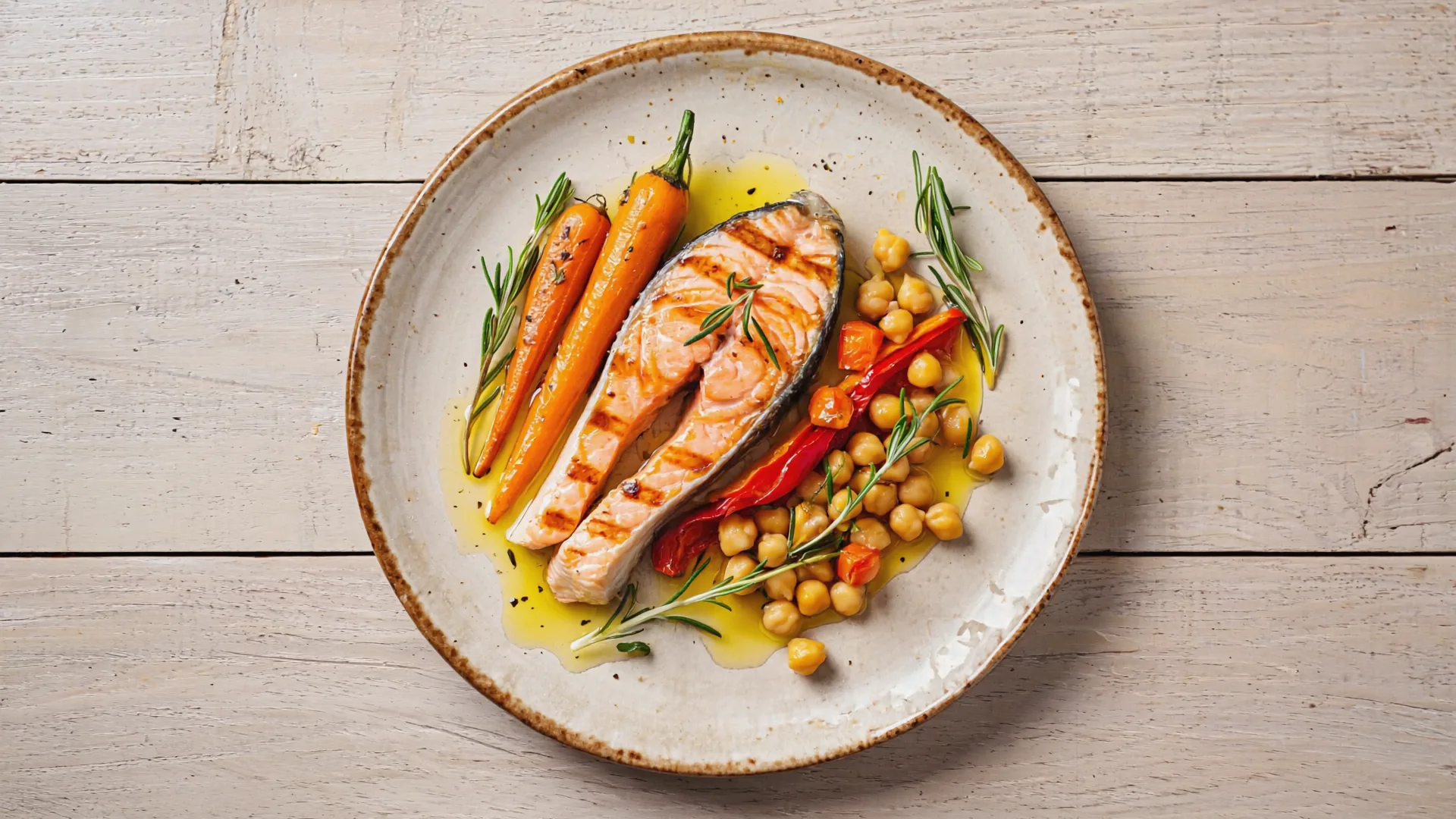
Food quality does quiet work. Mediterranean-style eating — vegetables, legumes, fish, olive oil, whole grains — is consistently associated with less visceral fat, on top of whatever calorie deficit it rides in on. Adequate protein protects muscle during weight loss and helps fullness; fibre does similar quiet work. Nothing exotic required.
Sleep and stress are real levers, not wellness garnish. Chronically short sleep and persistently high stress are both associated with more visceral fat — the cortisol connection gets oversold online, but the associations themselves are genuine. Treating sleep as part of the plan costs nothing.
Alcohol counts double. It's dense energy that attaches to no fullness, and it tends to deposit centrally. We did the full Irish arithmetic — what a round actually costs in calories, and the lower-calorie swaps that survive a night out — in our guide to alcohol and calories in Ireland.
That's the whole list. No detoxes, no fat-burning supplements, no ice-belt gadgets — none of which have evidence worth the word. If you want medical support alongside it, that starts with a proper assessment, not a purchase.
Where GLP-1 medicines fit in
Because the obvious next question is whether weight-loss injections do anything about the deep fat specifically — and this is where imaging trials have actually looked.
The most-cited evidence comes from the SURPASS-3 MRI substudy (Gastaldelli and colleagues, Lancet Diabetes & Endocrinology, 2022). In 296 adults with type 2 diabetes over 52 weeks, those on tirzepatide (the medicine behind Mounjaro) saw liver fat fall by about 8 percentage points on average — from a baseline of roughly 16%, that's in the region of half the liver fat — compared with about 3 points on titrated insulin, and abdominal MRI also showed significantly greater reductions in visceral fat volume.
A 2025 meta-analysis of randomised trials reported tirzepatide reducing visceral fat by roughly a fifth overall. Body-composition data from the large trials adds that around three-quarters of the weight lost on tirzepatide is fat rather than muscle — semaglutide comes in somewhat lower, around three-fifths.
The honest framing of that evidence: it's promising and imaging-based, much of it comes from populations with type 2 diabetes, and these medicines are prescribed — in Ireland, through clinics like Slimbr following eligibility criteria — as an adjunct to diet and activity, not a replacement for them. Whether medication is appropriate for you is a doctor's call: see who actually qualifies for weight-loss injections in Ireland, and our overview of medical weight-loss treatment in Ireland for the full picture. Side-effect questions are covered in our guide to Mounjaro side effects.
FAQ: visceral fat
What is visceral fat?
Fat stored deep inside the abdomen, around the liver, pancreas and intestines — as opposed to subcutaneous fat, which sits just under the skin. It's metabolically active and associated with higher risk of several chronic conditions.
How do I know if I have too much visceral fat?
The home screening is a tape measure: a waist of 94 cm or more for men, 80 cm or more for women (European thresholds used in Irish guidance), or a waist more than half your height, suggests carrying more central fat. BMI can't distinguish it.
Is visceral fat worse than subcutaneous fat?
It's associated with higher metabolic risk. Visceral fat drains fatty acids and inflammatory signals directly to the liver and is linked — independently of BMI — to type 2 diabetes, heart disease, high blood pressure and fatty liver. Subcutaneous fat is metabolically quieter.
Can you have a normal BMI and still have high visceral fat?
Yes — researchers call the pattern TOFI ("thin outside, fat inside"). It's one of the known blind spots of BMI, alongside over-reading muscle as fat in athletic builds.
What's the best way to lose visceral fat?
A sustained moderate calorie deficit, around 30 minutes of moderate exercise most days (aerobic plus resistance work), Mediterranean-style food quality, adequate sleep, and keeping alcohol in check. Visceral fat typically responds early to these basics — but it can't be spot-reduced by any exercise or device.
Do GLP-1 medicines like Mounjaro reduce visceral fat?
Imaging trials suggest yes: in the SURPASS-3 MRI substudy, tirzepatide significantly reduced liver fat and visceral fat volume versus insulin over 52 weeks in adults with type 2 diabetes. These medicines are prescribed alongside diet and activity changes — eligibility is a doctor's decision.
Figures checked 18 October 2026. Diagnosis approach and waist thresholds from HSE guidance (obesity assessed from BMI, waist circumference and weight-related conditions; waist measured particularly when BMI is under 35) and Irish/international central-obesity thresholds (94/80 cm; 102/88 cm). Waist-to-height guidance from NICE (2022). Exercise guidance per HSE/international physical-activity guidelines (~30 minutes moderate activity, five days a week).
SURPASS-3 MRI: Gastaldelli et al., Lancet Diabetes & Endocrinology 2022 (n=296, 52 weeks, adults with type 2 diabetes). Pooled visceral-fat reductions from a 2025 meta-analysis of randomised trials. This article is general information, not medical advice; questions about your own weight, waist measurement or any medicine belong with your own doctor.


