
Of all the side effects people talk about with Mounjaro and Wegovy, constipation is one of the most common — and one of the least talked about. It is uncomfortable, and it is common, and for most people it can be managed with a few practical steps. Here is the calm, evidence-based version: what the official product information says, why these medicines slow the bowel down, what actually helps, and the few situations where you should contact a doctor.
Quick answer
Constipation is one of the most common side effects of both Mounjaro (tirzepatide) and Wegovy (semaglutide). In the pooled Wegovy trials it affected 24.2% of people (versus 11.1% on placebo), was mostly mild to moderate, and lasted a median of 47 days. It happens mainly because these medicines deliberately slow how quickly food moves through your stomach and gut. Many people find fluids, fibre and movement help — and a small number of red-flag symptoms always deserve a doctor's attention. See if a doctor-led programme suits you.
Try the Slimbr weight loss plan
First month service fee just €49. If the doctor decides it's not suitable for you, your doctor consultation is free.
How common is it, really?
Unusually for a side effect, we can answer this with precise trial numbers for Wegovy. In the pooled placebo-controlled semaglutide 2.4 mg trials reported in the EU product information, constipation occurred in 24.2% of people taking the medicine versus 11.1% on placebo. Most cases were mild to moderate — and while nausea tended to last around 8 days and vomiting 2, constipation lasted longer than nausea, vomiting or diarrhoea (median about 47 days versus 8, 2 and 3), and the product information notes these gut effects are mainly seen in the dose-escalation period.
For Mounjaro, the EU product information lists constipation among its gastrointestinal side effects, and specifically notes that it has been reported in patients treated for weight management. The trials behind it tell the same story as Wegovy's: gastrointestinal effects were the most frequently reported reactions and were mostly mild or moderate; the product information notes that nausea, vomiting and diarrhoea were more common during dose escalation and decreased over time.
In plain terms: if you are constipated on these medicines, you are somewhere near the most common experience there is — not an unlucky outlier. For a wider view of the full side-effect picture, see our guide to Mounjaro side effects in Ireland.
Why Mounjaro and Wegovy cause constipation
GLP-1 medicines work partly by slowing how quickly your stomach empties. That slower emptying is a feature, not a bug — it is one of the reasons you feel fuller for longer after eating. But slower transit through the stomach and upper gut also means the bowel has more time to absorb water from the food residue passing through. Drier residue can mean harder, less frequent stools.
Two secondary effects compound it. First, most people on these medicines simply eat less overall — which usually means less fibre and less food volume pushing things along. Second, eating itself is one of the bowel's natural "get moving" signals (doctors call it the gastrocolic reflex); smaller, less frequent meals mean fewer of those signals. The combination — slower transit, less fibre, fewer cues — are among the reasons constipation is common.

What actually helps at home
The good news is that the standard first-line advice is simple, free, and consistent with the HSE's own constipation guidance.
1. Fluids first. Drink plenty of water through the day. This matters double if you are increasing fibre — fibre without fluid can make things firmer, not looser.
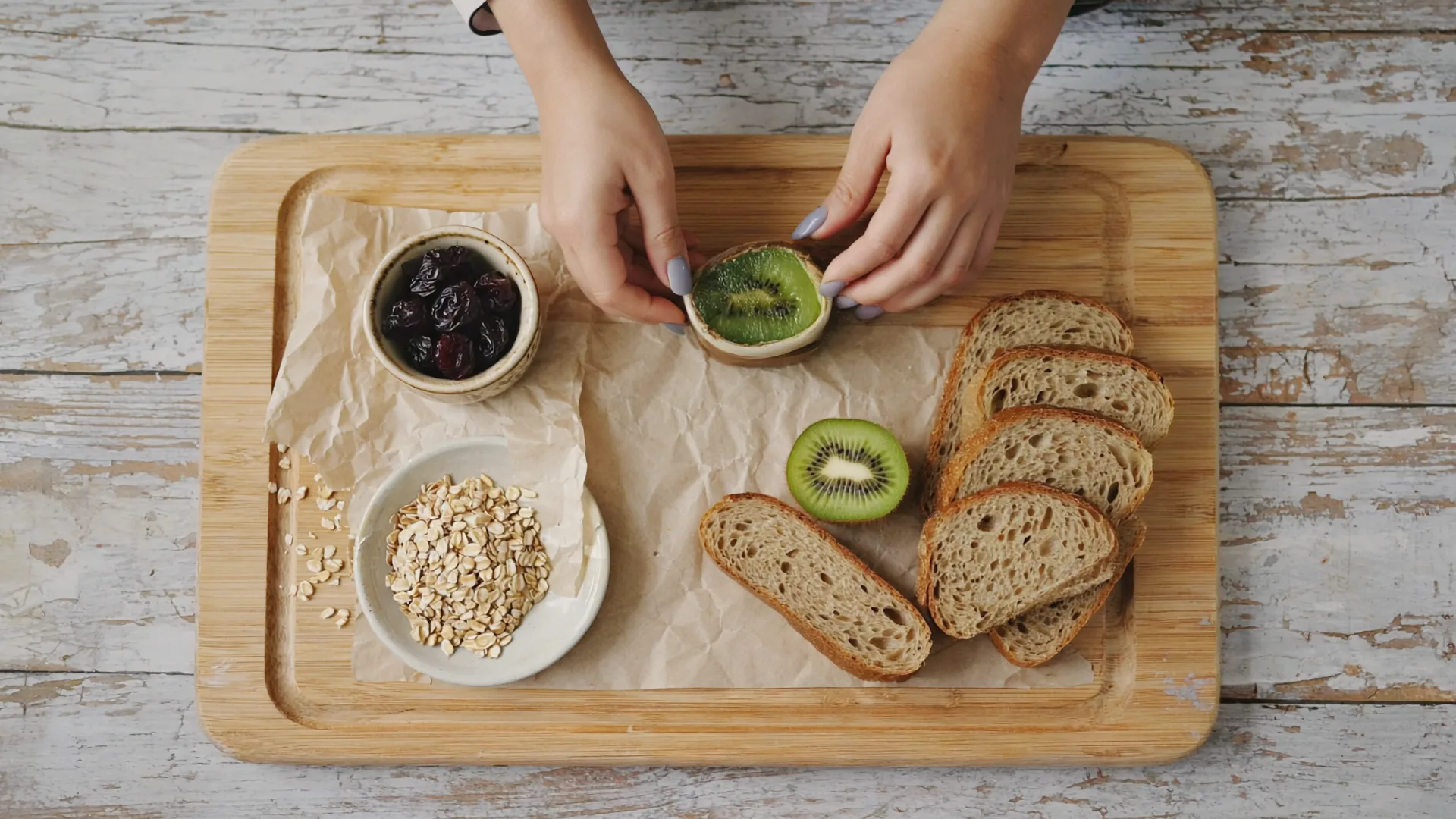
2. Build fibre up gradually. The HSE advises increasing fibre in your diet and specifically suggests adding wheat bran, oats or linseed. Go up slowly over a week or two rather than all at once — a sudden fibre jump can cause bloating and wind while your gut adjusts.
3. Keep moving. Regular moderate movement — a daily brisk walk counts — is consistently recommended to stimulate bowel motility. It does not need to be strenuous.
4. Do not ignore the urge. Repeatedly postponing a bowel movement lets more water be absorbed and hardens the stool. Give yourself unhurried time, ideally at the same point each day; some people also find a small footstool under the feet helps a more natural position.
5. Everyday high-fibre foods. Fruit such as prunes or kiwi, and wholegrains such as oats, are common high-fibre choices that many people include as part of a balanced diet. (The HSE specifically names wheat bran, oats and linseed.)
If home measures are not enough after a couple of weeks, that is a review conversation rather than something to tough out — see how a supervised programme works.
Did you know you can claim up to 75% back on your health insurance?


 See how the claim works →
What about pharmacy options?
If fluids, fibre and movement are not enough after a week or two, a pharmacist can suggest suitable over-the-counter options — and it is worth mentioning you are taking a GLP-1 medicine when you ask. If you are a Slimbr patient, raise it with our clinical team before starting anything regularly: our doctors will confirm what is suitable alongside your treatment, and whether anything about your dose or schedule deserves a review. What you should avoid is silently self-treating for months without anyone in the loop.
When to talk to a doctor
Most GLP-1-related constipation is mild and manageable — but contact a doctor promptly, and seek urgent care if symptoms are severe, if you experience:
- significant or worsening abdominal pain, especially with vomiting
- no bowel movement at all for several days alongside bloating or pain
- blood in your stool, or black, tarry stools
- constipation with unexplained fever
- persistent vomiting, being unable to pass wind, or a swollen, hard abdomen
These can point to problems other than a medicine side effect — including, in some cases, bowel obstruction. The EU product information for Wegovy lists intestinal obstruction (including ileus) among post-marketing reports with semaglutide, with a frequency that cannot be estimated. That is exactly why the red-flag list above is worth knowing.
Does constipation mean the dose is too high?
Not necessarily. Gut effects cluster around dose increases, but plenty of people manage constipation comfortably at their effective dose — and dose decisions belong to your prescriber, never to a self-adjustment. If constipation is persistently making you miserable, that is a legitimate thing to raise at a review: sometimes the stepping-up pace is slowed, sometimes simple support resolves it with no change at all. Do not stop or adjust your medicine yourself — for what happens when treatment stops, see coming off Mounjaro or Ozempic.
FAQs: constipation on Mounjaro and Wegovy
How long does GLP-1 constipation usually last?
In the pooled Wegovy trials, the median duration of constipation was about 47 days, and most cases were mild to moderate. It varies from person to person. If it is not improving after a few weeks of the home measures above, raise it with your doctor or pharmacist.
Can I take a laxative while on Mounjaro or Wegovy?
Over-the-counter options exist, but the right choice depends on your situation — ask a pharmacist, and tell them which medicine you take. If you are a Slimbr patient, check with our clinical team before using anything regularly.
Will fibre supplements fix it?
They help many people, with two caveats: increase gradually (to limit bloating), and drink plenty of fluid alongside — fibre without fluid can worsen things. Food-based fibre — such as wheat bran, oats and linseed, as the HSE suggests — is the gentler starting point.
Is constipation a reason to stop treatment?
On its own, no — it is one of the most common and most manageable effects, and stopping treatment abruptly has its own consequences (weight regain can occur without a plan). It is a reason to mention it at your next review. Red-flag symptoms from the list above are a different matter: those need prompt medical attention.
Does everyone get constipated on these medicines?
No. Roughly one in four people in the Wegovy trials reported it (24.2%) — and the Mounjaro product information likewise lists constipation among its gut effects — meaning most people do not get it at all, and many who do have it mildly. The same medicines also cause diarrhoea in a somewhat larger share of people; individual responses genuinely vary. For the full side-effect picture, see our complete guide to Mounjaro in Ireland.
Is Ozempic constipation different?
Ozempic contains the same active medicine as Wegovy (semaglutide) at diabetes-treatment doses, and constipation appears in its product information too. The same practical steps apply — and Ozempic is licensed in Ireland for type 2 diabetes, not weight loss. For how the two licences differ, see Ozempic vs Wegovy in Ireland.


